October 2026 Newsletter
Fall Wrap-Up
This fall, Tahoe's Fire Adapted and Firewise Communities continued to make their communities more wildfire resilient. Leaders worked hard to help their communities become more educated, involved, and prepared for wildfire. Check out the photos below for highlights!🍂


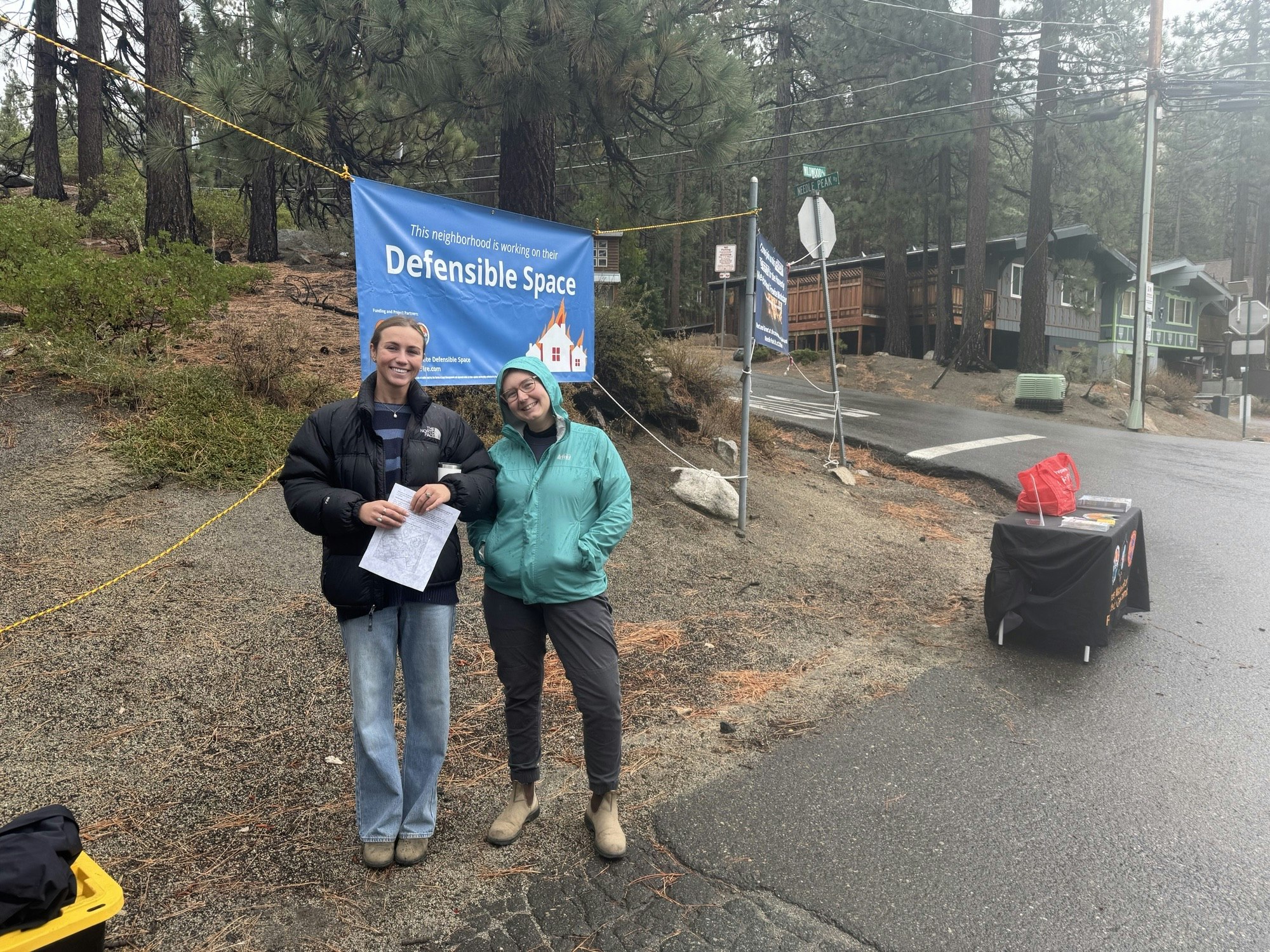
Raking Pine Needles to Maintain Defensible Space
What can people do to get ready for winter?
🍂In the fall, let them fall. The recommendation for defensible space is to leave the current pine needles for erosion control during the winter, with the exception of Zone 0. Zone 0, or the “non-combustible zone” is the first 0-5 feet surrounding a structure and is the most crucial part of maintaining defensible space. Experts reccommend keeping this area clear of pine needles year round.
🌱In the spring, rake them all. Wait until the spring to perform the bulk of pine needle removal. This protects the soil from erosion due to heavy precipitation during the winter.

Using Fire as a Tool
Prescribed fire, or “beneficial fire”, is one of the most effective tools available for restoring forest health and reducing wildfire risk, but it comes with tradeoffs.
When implemented, prescribed fire reduces surface fuels, supports fire-dependent ecosystems, and helps restore natural forest processes. It can improve forest structure and reduce the likelihood of high-severity wildfire.
Prescribed fire also has short-term impacts, including smoke and temporary closures. These concerns are real and understandable, but they must be weighed against the long-term risks of inaction: denser forests, heavier fuels, and more severe wildfire when fire inevitably returns.
The TFFT helps coordinate prescribed fire efforts across the Basin to ensure projects are implemented strategically, safely, and with clear communication. Education and transparency are key to building understanding and trust.
Prescribed fire is not a silver bullet, but it is a critical part of living responsibly with fire and building resilient forests and communities.
Lake Tahoe Basin Prescribed Fire and Forest Fuels Project Map
Curious about projects near you? Visit the Prescribed Fire and Forest Fuels Project Map to learn about prescribed fires and forest fuels projects currently managed by TFFT partners in Lake Tahoe.

Meet the Wildfire Resiliency Fellows
In September, Rosa and Kat joined the Fire Adapted Communities Program as Wildfire Resiliency Fellows. They support outreach and education for FAC around the Lake Tahoe Basin.


Additional Resources
- Firewise Data Webinar
- Neighborhood Leader Library
- Meet the California Tahoe Conservancy Webinar
- Meet the US Forest Service Webinar
- Tahoe Resource Conservation District's October 2026 Newsletter
Upcoming Events
- Stewardship Webinar - Engaging Your Neighbors for Wildfire Preparedness - Tuesday, November 10th 11:30 am -12:30 pm. Register here.
- Upcoming community meetings - visit our calendar for the meeting schedule.
Get involved today by joining your Fire Adapted Community, attending an upcoming event or webinar, volunteering at a neighborhood work day, or taking steps to create defensible space around your home. Together, we can take proactive steps today to protect our homes, neighborhoods, and the Tahoe Basin for years to come.

Tahoe Network of Fire Adapted Communities
tahoelivingwithfire.com | 530-543-1501 ext. 114 | fire@tahoercd.org

This project was funded due to the Southern Nevada Public Land Management Act, which authorized the sale of BLM administered federal lands within a designated boundary in the Las Vegas Valley and required proceeds to be used on projects to fund federal, state and local projects that benefit communities and public lands.